Tuesday, October 25, 2011

[WSK 2011] When Samulnori Meets Digital


       Sebelumnya aku sudah memposting tentang Samulnori disini. Seperti yang aku tulis disitu, pertama kali dengar iramanya, aku sangat tidak suka sekali. Karena suaranya berisik dan iramanya tidak beraturan. Benar-benar tidak ada apa-apanya dengan Gamelan yang indah iramanya. Tapi karena termasuk salah satu pertunjukan tradisional Korea yang cukup terkenal, samulnori biasanya ditampilkan di berbagai macam acara, sehingga aku sering mendengar dan lama-lama menjadi suka bahkan menjadi salah satu pertunjukan favoritku.

       Seperti di Indonesia dan di negara lainnya, di Korea juga mereka me-mix budaya tradisional dan modern, misalnya seperti yang tertulis di artikel WSK di bawah ini, tentang samulnori dan alat musik digital. Aku juga pernah menonton pertunjukan break-dance B-boys yang diiringi dengan gayageum! Wow, benar-benar tidak terbayangkan! Alat musik yang biasa memainkan irama slow mengiringi tarian yang penuh gerak. Tapi memang benar-benar keren pertunjukannya waktu itu.

       Musik serta pertunjukan di Indonesia bisa berkembang dan lebih keren dari ini kalau kita bisa melestarikan, menjaganya, bahkan me-mix&match dengan pertunjukan modern sekarang ini. :")


When Samulnori Meets Digital


       Samulnori, which was created from Korean traditional music, Pungmul, is one of the most beloved genres of music among many Koreans and considered to harmonize the East and West and Old and New. It is one of the most dynamic music in the world and makes us thrilled with powerful sound and dynamics. Now shall we learn about Samulnori?

Sound of Korean, Samulnori is trying to be changed

       Samulnori makes everyone’s heart beat faster with only four musical instruments. Kkwaengguari(small gong) symbolizes thunder, Janggu( traditional double-headed drum) symbolizes rain, Buk(drum) symbolizes cloud, and Jing(gong) symbolizes wind.


Exciting Performance of Samulnori (Source: Seoul Shinmun)


       The elaborate construction of rhythm and dramatic musical performance make Samulnori more exhilarated. Samulnori is now trying to be changed from the boring image of the past. It creates fusion music with various genres of music and inspires the new performance like Nanta.


Kim Duk-Soo with His Friends Touching all over the World

       Samulnori is a compound word of 'Samul-percussion instruments' and 'Nori-play'. Samul refers to Kkwaengguari, Jing, Janggu and Buk. Now, we have many Samulnori performance teams, however, Samulnori was first created in 1978 by Kim Deok-Soo with His Friends- Kim Deok-Soo, Lee Kwang-Soo, Choi Jong-Sil, and Kim Yong-Bae, who started playing music since they were little. Later, they grew up as very talented performers. Kim Yong-Bae who studied at Korean Traditional Music high school is the one who contributed a lot to the first step of Samulnori.

       That’s why Kim Deok-Soo and His Friends comes to our minds when speaking Samulnori. Well, they attended the World Contest of Percussion Instrument Players in 1982, World Drum Festival in Vancouver, Canada in 1984, and held a celebrating performance for the Olympic Torch in Seoul Olympics in 1988. Kim Deok-Soo and His Friends enhanced the national prestige by performing Samulnori in Japan, U.S. and so on. Last year they performed ‘Digilogue Samulnori-Blooming the Dead Tree’ scripted by Lee O-Young, the former minister of the ministry of Culture, Tourism, and Sport.


Performance of 'Digilogue Samulnori-Blooming the Dead Tree' (Source: Hankook Ilbo)


       They performed Digilogue Samulnori with four musical instruments. These four instruments symbolize the four directions- East, West, North and South and four seasons- Spring, Summer, Autumn and Winter. It shows us how deserted real world blooms, returning to Winter and again sprouts. It mixed digital and analogue, online and offline and put into one performance. They combined virtual reality and real world together and adopted four- dimensional (4D) technology, which became a turning point that traditional Korean performance can be universal. As seen the possibility of digital-Samulnori performance, Samulnori proved its rhythm compatible with any kind of genre, such as Jazz and Blues as well.

       In addition, Kim Deok-Soo dramatized Arirang (Korean traditional folk music) that we can look into the past and future of Korea. It is composed of 7 chapters and played with Samulnori instruments, traditional musical instruments including Kayageum, Haegeum and so on. They also used western instruments like violin, piano and saxophone. It shocking because they mixed music instruments from Asia and the West and dramatized traditional music. It contributed a lot for Arirang becomes worldwide music.


Samulnori Tempted World with Rhythm

       There are a few percussion instrument groups in Korea excluding Kim Deok-Soo and His Friends. 'Noreummachi' is one of them. It is a compound word of ' Noreum-play' and 'Machim-finish'. Noreummachi is a fusion music group that mixes Samulnori and rap music. Noreummachi had their first concert abroad last year. Kim Deok-Soo tried hard to introduce Samulnori to the world but Noreummachi tried to popularize Samulnori. Noreummachi will have concerts in four European countries until Aug 25th this year.


Noreummachi Performing in Overseas (Source : Maeil Business Newspaper)


       Other fusion group called 'Deulsori' will have concerts in Italy, U.S. and South America from this August. Sebastian Wang is a Korean-American and he was born and grew up in the U.S. He was captivated by Samulnori and tried to popularize Samulnori in the world. He hopes Samulnori become the national brand of Korea like Samsung, LG and Taekwondo.


Let's Enjoy Samulnori

       Samulnori has become popular in Korea. There is an application we can play Samulnori in the smart phone. Intangible cultural treasure students record all rhythms they play with Samul and computer musician transforms it into digital and put them in the application. It is very easy to improvise Samulnori like them.

       Last December Korean movie star Jang Dong-Geon was on the Hollywood action blockbuster movie 'Warrior's Way' and this movie inserted Samulnori in it. Samulnori sounds was applied into the major action scenes and ending credit. Samulnori performance was inserted in the action scenes in the hall and it was well harmonized with gun shooting sounds. It caught attentions from all over the world and it enhanced the beauty of the image in the movie.


Samulnori Goes Beyond the Generation (Source : Kyunghyang Shinmun)


       Regardless of the past and present, performers and audience, Koreans and foreigners, Samulnori keeps making progress with new interpretation and recreation of the music. We hope Korean traditional music spread into the world and become the representative brand of Korea.

*this article is from http://blog.daum.net/korea_brand/1437

[WSK 2011] Find the spots of Dramas in Jeju


       Pecinta drama atau Korea, biasanya jalan-jalan ke Korea untuk mengunjungi spot-spot syuting drama atau film. Korea sendiri sadar sekali akan trend yang dibawa oleh drama atau film mereka, sehingga tempat syuting drama atau film yang terkenal biasanya di buka sebagai tempat wisata.

       Nah, pulau Jeju ini selain bagus pemandangan alamnya dan memiliki banyak museum, juga punya tempat wisata spot-spot syuting drama atau film Korea. Seperti yang ditulis pada artikel WSK dibawah ini.

       Kalau di Indonesia, selain 'Laskar Pelangi', film apa lagi ya yang tempat syutingnya bisa jadi tempat wisata? :")


Find the spots of Dramas in Jeju


       Due to the beautiful scenery and 1000 different faces, Jeju Island has been chosen as a background of advertisements, movies, and dramas. There is a saying that if the drama is filmed in Jeju Island, it will definitely succeed, because the scenery has a huge impact itself. Due to the success of dramas, more and more tourists are naturally coming to see Jeju Island. Drama makers choose Jeju Island as the best location for filming because of its picture-like and exotic scenery. Let’s get out of the small drama sets, and take a look at the filming locations in Jeju.


Rediscovered by 'My name is Kim Sam-sun', Sungsan Ilchul peak

       My name is Kim Sam-sun, which was broadcast on MBC in 2005, produced a lot of great scenes and famous quotations with the best viewer ratings of 50.5% of the year. One of the great scenes was when “Hee Jin” (Jung Ryu Won) and “Henry” (Daniel Henny) climbed up the mountain and talked, looking down the scenery of Jeju. The wide meadow and the transparent ocean not only helped the scenery look more beautiful and dramatic but also attracted lots of tourists to the place even after the drama ended. Then, where is the location that made the drama stood out?


Sungsan Ilchul peak
which was designated as the 420th Natural Monument
as well as the filming place of 'My name is Kim Sam-sun'
(Photo: Hani news)


       World Natural Heritage, Sungsan Ilchul peak which was designated as one of the eight best attractions in Korea is the spot of the drama. Sungsan Ilchul peak has been chosen as the best attraction among others with its unique history, culture and nature by the Ministry of Culture and was recognized the possibility of development. To be selected as one of the best places, it should be recommended by many people, and pass a peculiar judging procedure such as documentary review, online vote, and in-situ survey. How could Sungsan Ilchul peak proudly be acknowledged?

       Sungsan Ilchul peak, which is considered the first among ten sceneries of Jeju, has beautiful scenery . When you go up along the western steep ridge, on the top, there is a wide crater, which looks like the ocean has been moved to Baengnokdam at the top of Mt. Halla. Sungsan Ilchul peak, which is now at an elevation of 182m, is a rare volcanic edifice that was exploded under water among other craters. Due to the explosion caused when lava was mixed with water, lava was broken down into fine volcanic ash and was piled up around the circumference of the crater like a shape of cone. Originally, it was a volcanic island, however, a pile of sand and gravel connected the space between the island and the land side of Shinyang beach. At the top of Ilchul peak, there is a crater with a diameter of 600m, an elevation of 90m as the height of ground floor and the area of approximately 80,000pyeong. This place was used as a farm, but now it is a field of tall wild grass where Woodo can be seen with human eyes.

       Even a long time ago, the sunrise view from the top of Sungsan Ilchul peak has been the best among ten places with good sceneries in Jeju. The sunrise above a horizontal line beyond the surging blue ocean dyes the whole ocean, catches people’s heart and makes them admire it. It was designated as a regional monument until July 19, 2000 when it was designated as a natural monument. It is now a treasure of Jeju, which attracts more and more tourists and gives more inspiration than the drama itself.


Attractive Scenery of , Woodo

       Tamnaneundoda is a fantasy tale of what happened in Chosun Dynasty in a mysterious Jeju island It handles the 21st century style of communication happening in 17th century, which exceeds the wall of civilization, race, social status, and sex. Through the travel by different young men and women from different places, the drama gave the viewers an opportunity to think of their past where fantasy was real to them.

       Another main character of Tamnaneundoda is the scenery of Jeju which was shown as a background on drama. It was because the extensive land, high sky, transparent cloud and ocean, and ocean breeze that tickles our nose made a good combination of nice scenery, and they made viewers unable to stop looking at it. Even though the drama ended, Tamnaneundoda is still remained in our heart as attractive one. One of the most representative filming locations in Jeju was a peaceful island, Woodo, which looks like a cow which lies across the east side of the ocean.


The Scenery of Woodo stands out more than the main characters of
(Photo: hankook Ilbo)


       Even though the look of the rough and strong female divers of Jeju is interesting, Woodo is certainly the best. Even though the size of the island is small, across the shore, green ocean and black stone walls along the road, a mysterious land with beautiful sandy beach and beach scarps stretch out continuously. You can frequently hear the diving sound of female divers, and it makes sense because Woodo is called as 'the homeland of female divers'.

       There are the eight representative sceneries of Woodo: Day and Night (A full moon in day time, the light of fishing ship during the night time), Sky and Land (the look of Mt. Halla from East Cheonghindong Hang, Sand of Jeedu), Front and Back (Woodo’s front and back scenery), East and West (Cave and Cliff). Additionally, Woodo, the place where the movies A Love Story, Mermaid Princess were filmed, is a representative tourist attraction with Mt. Halla due to the impressive scenery of lyrical Jeju Island, the mood of cozy green meadow and white sandy beach touching Jeju’s blue ocean.

       The place you shouldn’t miss in Woodo travel is Woodo peak. It has marvelous scenery where you can see the whole picture-like view at once. Also, the coral sand ocean in Woodo is a place where you can capture one of the best sceneries. Red algae makes the ocean shine in beach color with exotic mood, providing fascinating view.


Famous Location in 'All In', Subjicoji

       The drama that Lee Byung-Hun and Song Hye-Gyo, two world stars representing Korea, played the main characters was filmed near Subjicoji. After the drama, this place became well-known as the location of the drama, which resulted in lots of tourists coming by. Even after the drama ended, the set was still remained, which got tourists’ attentions. Also All In house was built to remember the drama. When spring comes, Subjicoji, sticking out from the east coast of Jeju, shows the great ocean view with the background of Sungsan Ilchool peak with yellow rape flowers.


'All In' house, the first drama museum restored at Subjicoji (Photo: the Korea Tourist Service, Inc.)


       Shinyang sandy beach at the entrance, the field of rape flowers covered over the meadow at the edge of a hill, ponies eating grass peacefully, beach scarps and legendary Zen rocks are typically wonderful places you can find in Jeju. Especially the shore is made of red volcanic ash called “Songyi”, which is different from other shores in Jeju. Also, fantastic rocks and stones, which disappear and appear according to the flow and the tide are not able to be seen anywhere.


Jeju Folk Village Museum, the background of Oh-Na-Ra, Oh-Na-Ra

       Dae Jang Geum, a drama, which was the most popular not only in Korea but also in the entire Asia, is actually a historical drama of Chosun Dyanasty, which a famous actress, Young-Aeh Lee stars. It is so famous that even though the drama ended a long time ago, people still talk about it. Jeju Folk Village Museum, the entire background of Dae Jang Geum, left a town of old thatched- roof houses, which is perfect to film a historical drama.


Jeju Folk Village Museum is now used as a background in many historical dramas than in 'Dae Jang Geum' (Photo: the Korea Tourist Service, Inc.)


       Jeju Folk Village Museum generally exhibits the organized collection of folk materials, traditionally from Jeju Island starting from 1890s, the end of the Chosun Dynasty. Especially, more than 100 traditional houses are not decorated just similarly, but were restored almost perfectly even from the tiny parts of the house where people lived before including stones and pillars. In this traditional house, there are about 8000 pieces of folk material including household items, farming equipments, fishing equipments, furniture, stone figures placed in front of a tomb and etc. It is a place where the traditional culture of Jeju is preserved, where we can see our flowers and trees at once and where we can compare the differences and similarities with World heritages. Lots of tourists who visit Jeju don’t miss this place and feel the scent of Chosun dynasty.

       Wouldn't it be much greater if you can not only enjoy the interesting drama story, but also the beauty of Jeju Island? If you are inspired by the role of Jeju as a catalyst providing dramas more fun and sceneries, why don’t you actually visit Jeju in person and be the main character of your own drama?

*article is from http://blog.daum.net/korea_brand/1437

Monday, October 24, 2011

Tteok (Korean rice cake) Museum


       Yahoo, last weekend I went to Seoul and got a chance to meet my friend, Daniel, who got job in Seoul. We went to Tteok Museum (떡 박물관) in Jongno-3-ga area.


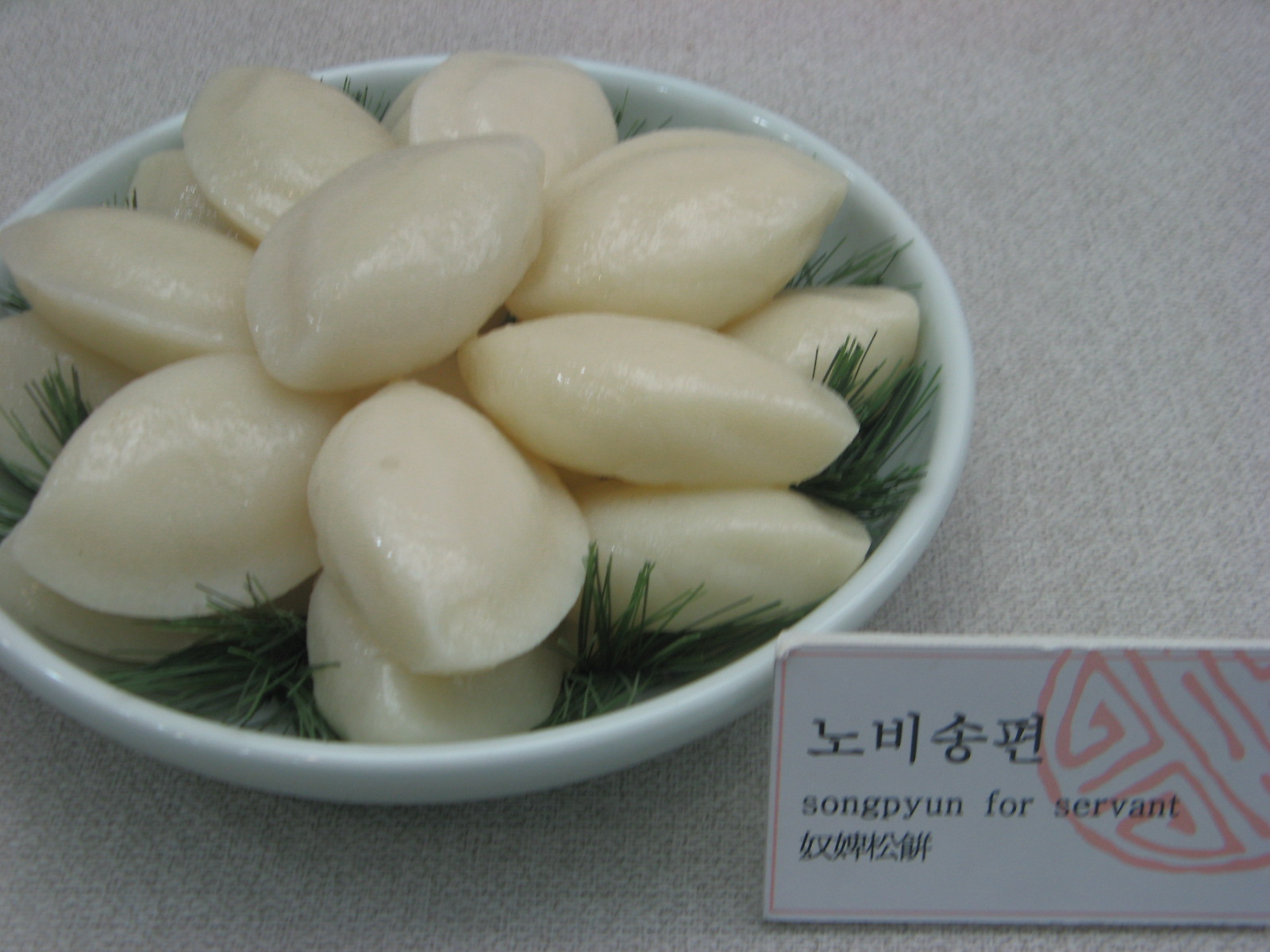
       The entrance ticket is 2.000 won, and we can see many kind of Korean rice cake models, equipment to make tteok, and many things.


       There is a Tteok café in front of the museum. So, if you feel hungry and want to try some tteoks you can buy at the café.


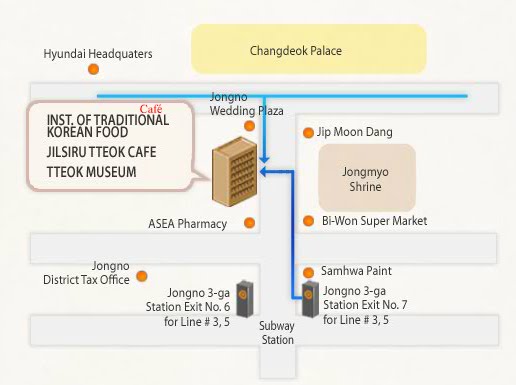
       It is very easy to find the Tteok museum and café. Just stop at Jongno-3-ga station (종로3가역) and follow this map! :") Need more detail? Just go to their website, http://www.kfr.or.kr/eng/index.htm. Enjoy~!


Thursday, October 20, 2011

Busan Global Gathering 2011 (Oct 22nd)


       Fall is full of festival~! If you have time or in Busan that time, I recommend you to come to this festival!


2011 Busan Global Gathering
Saturday, October 22nd 2011

10:00 am ~ 05:00 pm
@ Haeundae Naru Park
http://www.globalgathering.or.kr/


       There will be 112 booth representing 74 countries and organizations. You can see a lot of nice performance, doing body/face painting, try costumes from many countries, buy and try food from the booth and so on. Also don't forget to come to Indonesian booth arranged by Indonesian Kyungsung University students and other Indonesian friends~ :")

Wednesday, October 19, 2011

Busan Fireworks Festival 2011 (Oct 21st-29th 2011)


       After a beautiful fireworks festival in Seoul on October 15th 2011, last week, you will regret if you miss the more beautiful one in Busan. Busan International Fireworks Festival is back again~!!!


Busan International Fireworks Festival 2011
October 21st (Friday) ~ 29th (Saturday)

Gwangalli Beach and Gwangan Bridge Area


       About 5 years ago, when I saw it for the first time, the festival was only held one day. But now, they have 4 days only for main events and there are a lot of interesting side events. There are also fireworks from other countries such as USA, Japan, Poland and China. Just check the schedule from the website, http://www.bff.or.kr/ENG/Fireworks/01.asp.

       Don't miss the show~ :")


       I would to share my videos from last year fest. Enjoy~!


Shanghai Trip #8 [Shanghai Aquarium]


       Kalau di artikel sebelumnya sudah ngebahas tentang Busan Aquarium. Sekarang aku ingin menulis tentang Shanghai Aquarium. Aquariumnya gedeee banget. Kalau ke aquarium ini Busan Aquarium dan SeaWorld di Jakarta jadi berasa kecil.


       Ada eskalator kebawah yang di sekelilingnya kita bisa melihat ikan-ikan berenang. Serasa masuk ke dalam laut. :")


       Di dalamnya ada lagi eskalator horizontal masuk ke dalam tunnel yang panjaaaaaang sekali. Hampir 30 menitan kali berdiri di eskalator itu. Orang-orangnya banyak, tapi tidak ada yang dorong-dorongan. Senangnya~


       Ada juga anjing laut yang lucu banget!